News
How Can East Anglia’s Water Pollution Be Addressed?
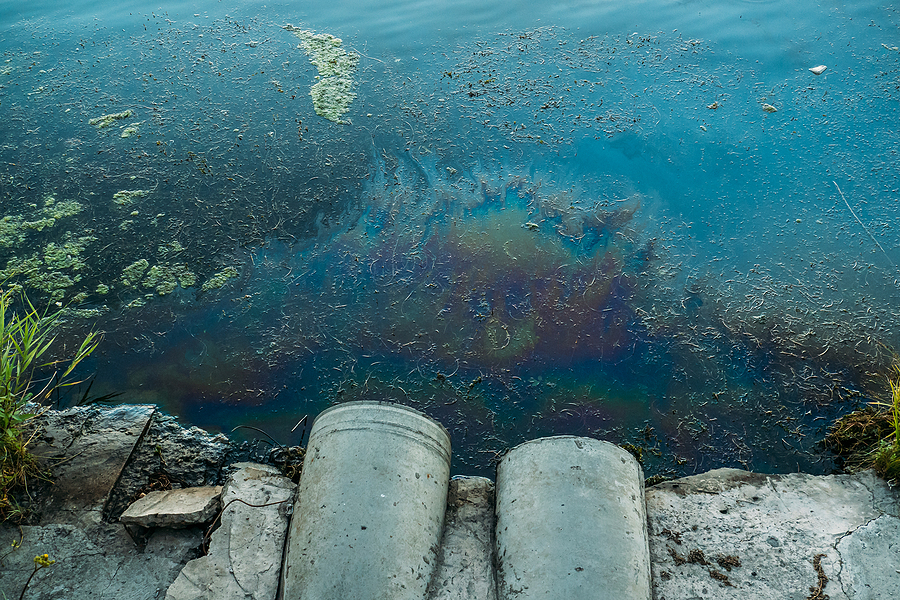
The East of England is a region that is already known for its water stress, being a flat part of the country with lower rainfall and more sunshine than any other part of Britain. However, a lack of water is not the only issue faced by the area.
Anglian Water, which supplies water to all the region’s domestic customers and some of its business users, is never slow to tell everyone that the dry climate, exacerbated by a changing climate and growing population, poses a major challenge.
While the company is always keen to outline what it is doing about increasing water supplies, from stopping leaks to its plans for two new reservoirs, it is, not surprisingly, rather quiet about the other water issue in the region, one that it is substantially responsible for.
How Bad A Polluter Is Anglian Water?
Wastewater pollution has been a hot topic over the past couple of years across the country, with the government’s response including the Water (Special Measures) Act 2025, which gives regulators such as the Environment Agency (EA) greater enforcement powers.
This enables the EA to take direct action, carry out more inspections and (via Ofwat) levy financial penalties, all of which are designed to get underperforming water firms to improve their wastewater management performance.
In its latest move, the EA has assembled its largest ever task force of enforcement officers and many of them have been sent into the Anglian region, with five new teams deployed to deal with the failings of Anglian Water.
Commenting on the shortcomings of the firm, EA water industry regulation manager for the area, Marcus Sibley, said: “Anglian Water is currently a below-average company, with two stars out of four in our most recent assessment of their 2024 environmental performance.”
Noting the need for major improvements, he detailed what has already been done since 2024:
- Since April 1st 2005, over 1,500 inspections have been conducted at Anglian Water’s wastewater sites
- This figure is more than the combined total of inspections over the previous six years
- More than 900 actions were identified as being necessary
How Does Water Pollution Affect The East Of England’s Waterways?
The damage that such pollution can do is substantial. It may have less rainfall than other areas, but the East of England is far from being a desert.
Its major towns and cities have notable rivers flowing through, from the Cam in Cambridge and the Orwell in Ipswich to the Yare, which links Norwich and Great Yarmouth.
In addition, the Broads is one of only two national parks in England to take its name from the bodies of water within it and the only one where the governing authority controls water navigation matters.
To pollute these waterways, especially some that will flow through a national park full of small lakes, is to provide particular damage to a beautiful countryside, as well as to the villages, towns and cities through and past which these rivers flow.
Enforcement work has been extensive, based on the “polluter pays” principle. Indeed, it is common to see fines levied against firms like Anglian Water, such as the £62.8 million the company and its shareholders had to pay out for an enforcement package last September.
Can Your Firm Be Part Of The Solution?
However, there is a further question that may be asked: Is the water pollution problem in East Anglia entirely down to the region’s main water company? For all the shortcomings identified at its wastewater treatment plants, that cannot be entirely the case.
Any commercial water user can be a part of the solution or part of the problem. You may ask these questions of your own company:
- Do you produce pollution that does not head via the drains to the water treatment works, but escapes in other ways and could get into local water courses?
- Can you take steps to reduce pollution at source, such as isolating harmful chemicals and preventing them from getting into the water?
- Could work on your own drains, pipes and other water infrastructure prevent pollution spillages, such as leaks that allow contamination to get into the soil and be washed into streams and rivers?
By examining these questions, you can start to investigate whether your activities are adding to the region’s pollution problems.
Naturally, you are likely to feel there are some questions you cannot adequately answer, which is where consulting with the experts on identifying problems and finding solutions will enable you to fix not only the issues you know about, but also those you were unaware of.
In the meantime, you may also examine your commercial water supplier’s record and assess whether they are performing well on the pollution front, or at least taking clear steps to improve their record.
If not, switching may be your own way of helping to ensure that the polluter pays.