News
How Will Water Scarcity Affect Food Production In The UK?
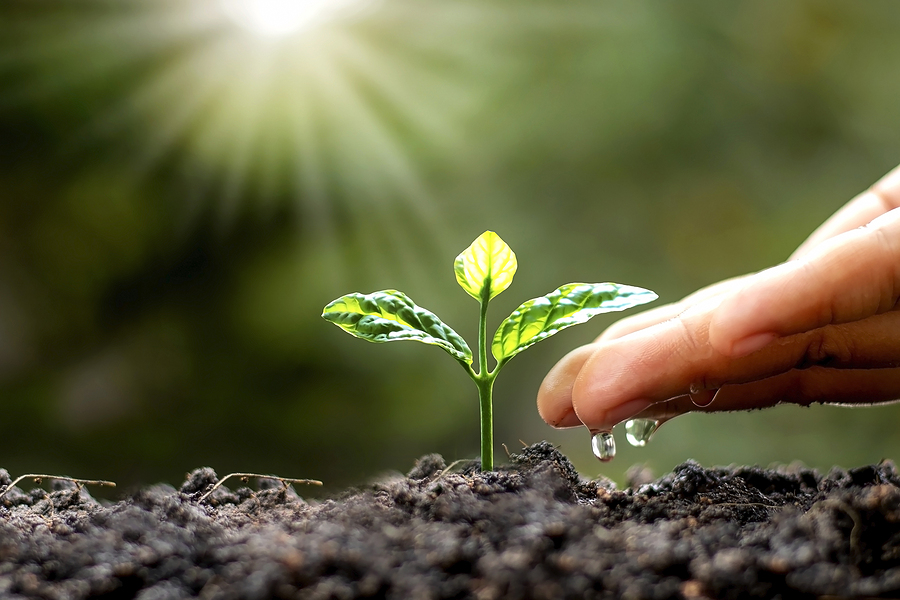
Water underpins every aspect of life in the 21st century, essential for drinking, sanitation, energy, industry, ecosystem health, biodiversity… and, of course, agriculture, which accounts for 70 per cent of all freshwater extractions around the world.
However, global agrifood systems are now increasingly under pressure because of loss of fertile land, accelerating soil degradation and more intense competition over water, according to a new report from the United Nations’ Food and Agriculture Organisation (FAO).
The flagship State of the World’s Land and Water Resources for Food and Agriculture 2025 publication indicates that water stress and scarcity, coupled with declining water quality, will increasingly shape how resilient, productive and sustainable agriculture is in the future.
In parts of Africa, South Asia and the Middle East, for example, such issues are already having an impact on production potential, with competition for water now intensifying between different sectors and rural livelihoods consequently being undermined.
There are already 1.2 billion people living in agricultural regions facing severe water constraints, with the report revealing that over 60 per cent of irrigated land (which produces 48 per cent of global crop value) can be found in places of either high or very high water stress.
As such, transitioning to more sustainable water management practices will only become more important as time goes on.
The situation is being exacerbated by groundwater depletion, with abstraction levels now so high that aquifers are unable to replenish themselves quickly enough.
Both agricultural use and drinking water safety are now being put at increasing risk by saltwater intrusion along coastlines, depleted groundwater levels and rising pumping costs.
Furthermore, water pollution is now widespread around the world, with sources including agricultural runoff, animal waste, urbanisation, population growth, water mismanagement and ageing infrastructure. This puts clean water availability under even greater threat.
All these pressures are also being magnified by climate change, with far-reaching impacts being felt around the world.
Changes in rainfall patterns, more frequent extreme weather events like droughts and flooding, and rising global temperatures are driving up water requirements for crop growth while simultaneously making water supplies less reliable.
To help tackle all these issues, the FAO report called for the integration of land and water governance, with global food production fully reliant on their combined resilience.
What are the main impacts of water stress and scarcity on crops?
If water is scarce at essential crop growth phases like flowering and grain filling, yields of produce like rice, maize and wheat will likely be significantly decreased, with plants struggling to meet maturity.
Extended drought can also lead to full crop failure, thus having an impact on both food availability and farmer revenue.
Because of this, growing numbers of farmers are now considering more drought-resistant species such as pulses, sorghum and millet, a move that can help relieve water stress but which will need to be supported by policies and market incentives.
Figures from the World Resources Institute show:
- 25 per cent of global crops are grown in places facing high water stress, or where resources are highly unreliable… or both
- Rice, wheat and corn (which provide over 50 per cent of the world’s food calories) are particularly vulnerable
- 33 per cent of these three crops are produced using highly stressed or highly variable water supplies
- Irrigated crops (making up 34 per cent of global total production by weight) face risks from increased competition over shared water supplies
- Around 60 per cent of global irrigated crops (by weight) are grown in places facing high/extremely high water stress levels
- Rainfed crops (making up 66 per cent of global total production) are at risk because of erratic weather patterns
- Demand for irrigation is expected to grow, climbing by 16 per cent by 2050
How does drought affect agricultural yields in the UK?
Drought conditions are becoming increasingly common in the UK, with climate change and low rainfall affecting surface water and groundwater levels.
Hotter summers drive evaporation from soil, rivers and reservoirs, while more intense rainfall during winter months (which can cause flooding) create a stop-start water cycle that makes water storage even harder to achieve.
The summer of 2025 was the hottest on record, leading to water usage restrictions in some parts of the country… and it’s possible that ongoing drought risks will continue well into 2026.
For crops, this means that reduced yields will likely be seen (including root crops like sugar beet and potatoes, as well as barley and wheat) because of insufficient soil moisture.
Reduced quality may also be seen in potatoes and vegetables, while winter-sown crops may struggle to germinate because of dry autumn soil. Drought conditions can also cause pest and disease issues, putting crops at even greater risk.
How does water scarcity affect livestock farming?
The global livestock sector is a significant user of both land and water resources, using around 35 per cent of total cropland and approximately 20 per cent of blue water for feed production.
Research shows that the industry uses the equivalent of 11,900km3 of freshwater each year – around ten per cent of annual global water flows.
Water usage for livestock farming must, as such, be taken into account as an integral part of agricultural water resource management, covering landless, mixed crop/livestock and grassland production systems, as well as species and breeds, and the socio-cultural aspects of farming in different parts of the world.
Livestock water footprints include resources used for feed production, drinking water and service water, with research indicating that feed production accounts for more than 90 per cent of global livestock water withdrawals (accounting for regional variations).
In line with global population growth, animal product demand is expected to increase by around 20 per cent, which means that government policies will need to be informed by effective water efficiency and sustainability strategies.
Necessary and effective interventions to minimise livestock water withdrawals will depend on local catchment areas and the specific issues that each region faces, as well as the production systems that individual farms have in place.
As water resources become more limited in the future, livestock production systems – which include dairy, pig and poultry enterprises, and which are particularly reliant on surface water and groundwater for health and hygiene – will be affected by the drying up of private supplies and restrictions placed on water abstraction sources.
This lack of water availability could put stress on animal health and wellbeing, as well as reduced production (such as reduced milk yield and daily live weight gain).
How much water do different livestock animals need?
- A cow has to drink at least three litres of water for every litre of milk produced. High-performing cows need 150 litres of water per day. Reduced water consumption is linked to reduced milk production
- Lactating sows need between 18 and 23 litres of water per day, gestating sows and boars between 13 and 18 litres, fattening pigs between three and ten litres, and weaners between one and three litres
- Poultry (per 1,000 birds): Broilers (1-4 weeks) need 50-250 litres per day, broilers (5-8 weeks) need 345-470 litres per day, laying fowl need 180-230 litres per day, pullets need 30-180 litres
- Ewes with lambs need between 9-10.5 litres per day and pregnant ewes/rams need between 4-6.5 litres per day
All livestock need to be provided with continuous access to water supplies and are likely to suffer distress if they’re unable to access this for more than 24 hours.
When water is limited, animals may become dehydrated and more susceptible to disease, as well as seeing reduced growth rates. Feed costs may also increase, as forage production is affected by water scarcity.
This can have the potential knock-on effect of forcing farmers to reduce herd sizes or transition to less water-intensive species, with consequences for local communities that rely on livestock for livelihoods.
How can UK farmers adapt to water scarcity?
With drought expected to become more frequent as time goes on, both crop and livestock farmers would be well advised to put measures in place that make their production systems more resilient.
Potential strategies include:
Water storage investment
Nature-based solutions like onsite wetlands and on-farm reservoirs can help store excess water in winter to help protect against summer droughts and shortfalls, while reducing flood risks.
Farming water batteries, for example, are water storage ponds that recharge when it rains, forming a smart water grid that can make public water supplies more resilient.
Elsewhere, rainwater harvesting technology can be installed to reduce reliance on mains water, while boreholes can be developed for livestock drinking water.
Efficient water management/usage
There are many ways in which this can be achieved, including:
- Water leak detection and repair
- Use of trigger sprays for cleaning rather than constant flow
- Smart watering systems (such as automatic troughs and nose pumps for on-demand use) to prevent water loss through spillage and evaporation
- Greywater reuse for irrigation or non-potable applications
Crop management
Here, strategies include:
- Planting drought-resistant crops
- Using cover crops to improve water retention
- Tree integration to reduce water use
- Mob grazing (where large livestock numbers are concentrated in a small area for a short time then allowing this land to rest for weeks/months) to help improve pasture health and water retention
Livestock management
Here, farmers could consider:
- Using locally adapted breeds that may be more tolerant to water stress, such as sheep or goats
- Reducing herd sizes to drive down water use
Water audits
Before any action can be taken, it’s important for farmers to know how and where they’re using water, so they can identify the most effective areas for change. This is something the H2o Building Services team can help with, so get in touch to find out more.
What is sustainable agriculture in the context of water limitations?
Sustainable agriculture that takes water stress and scarcity into account involves a range of different water management strategies, including:
Precision irrigation
Here, drip and micro-irrigation delivers water more precisely to plant roots to reduce surface water runoff and evaporation, which is more effective than flood or sprinkler methods.
Smart moisture monitoring
The use of smart sensors and the Internet of Things means that farmers can schedule irrigation for when it’s needed, preventing water wastage.
Mulching
Here, organic materials like straw and leaves can be used to cover the surface of the soil, suppressing weeds and reducing competition for water while driving down evaporation.
Conservation tillage
This practice works to minimise soil disturbance, reducing erosion and improving water filtration.
Manure management
Here, manure is stored properly to prevent nutrient runoff into waterways, preventing pollution.
Technological solutions for water scarcity in agriculture
As to be expected in the digital age, technology represents an excellent investment for farmers looking to address water stress and scarcity issues now and in the future.
Potential solutions include:
AI & smart sensors
Artificial intelligence (AI) can be used to excellent effect in agriculture, delivering targeted watering applications, measuring soil moisture, taking data from weather stations for automation irrigation, using drones to monitor crop health and supporting drip smart sprinkler systems for water conservation.
Aquaponics & hydroponics
Making use of alternative farming systems like hydroponics and aquaponics (which don’t use soil) can keep water in circulation, potentially using 90 per cent less water than traditional ways of working.
Agriculture 4.0
Digital agriculture is a relatively new and transformative approach to the industry that integrates digital tech into agricultural practices.
It leverages remote sensing, Big Data, AI, robotics and the Internet of Things to improve agriculture and agrifood systems’ efficiency, productivity and sustainability.
What is the link between water shortages and food prices?
As extreme weather events like drought, flooding and heatwaves (driven by climate change) become both more intense and more frequent, agricultural productivity will continue to suffer in line with this, with crop yields diminishing in response to disrupted planting schedules and degraded soil health.
The knock-on effect of this is that food prices will start to rise, further exacerbated by farmers passing the elevated costs of feed, fertiliser and fuel along the supply chain.
For example, in Brazil, coffee prices in December 2024 rose to an almost 50-year high because of ongoing drought conditions affecting nearly 60 per cent of the country. Not only was coffee quantity affected, but bean quality suffered, as well.
Or, elsewhere, olive oil costs have climbed significantly in recent years because of sweltering temperatures in the southern Mediterranean.
Price jumps can be seen after extreme weather events or because of consistently higher temperatures forcing farmers to review traditional cultivation patterns.
As the Guardian reported, economists are now starting to gather a growing body of evidence indicating that rising global temperatures are putting upward pressure on food inflation, as well as making food production systems around the world more volatile.
Furthermore, research published in the Communications Earth & Environment journal found that climate pressures could add between 0.9 and 3.2 percentage points on average to global food price inflation over the next ten years, depending on how hot the planet gets.
For somewhere like the UK, which imports approximately 50 per cent of its total food intake and around 84 per cent of its fruit, import costs and domestic food prices could become significant in the future.
Currently, figures show that since 2021 extreme weather and increasing energy prices have seen an average rise of £605 in household food bills.
Rising temperatures and impacts like drought, flood and crop failures account for 60 per cent of this increase per household.
Future projections for water availability and its impact on UK food supply
Globally, demand for water is expected to outstrip demand by 40 per cent come 2030.
In the UK, a significant shortfall is predicted, with the country needing almost five billion litres extra per day by 2050. Yet supplies are expected to have dropped by seven per cent by 2045.
Figures from Water UK indicate that the chance of serious drought between now and 2050, such that leads to water deficits and the implementation of supply restrictions, is between one in seven and one in four.
Unless action is taken, the risks of having insufficient water to satisfy demand are very real.
And, unfortunately, the places that will see the most significant water deficits in the UK are those regions already facing water stress and scarcity issues, namely southern and eastern England.
East Anglia and the Fens (Norfolk, Cambridgeshire and Lincolnshire), in fact, is known as the breadbasket of Britain, with the country relying on its fertile landscape and suitable soils for food production.
This is where a fifth of the nation’s crops come from and a third of its vegetables, as well as wheat, barley, beans, peas, fruit and salad vegetables.
Water security challenges are significant in this region, with agriculture putting pressure on dwindling water resources.
Additional challenges are also presented by population growth (the east of England is one of the fastest growing regions) and the fact that the area is already the driest in the country.
As such, UK food supply could be put at risk by increased demand for irrigation, possible drought-related crop failures, higher costs and elevated food prices, and the need for more efficient food manufacturing practices.
Get in touch
If you’d like to find out more about water conservation and how your business could go about saving both water and money, contact the H2o Building Services team today.