News
Changing Rainfall Patterns: How Could This Shape Water Management?
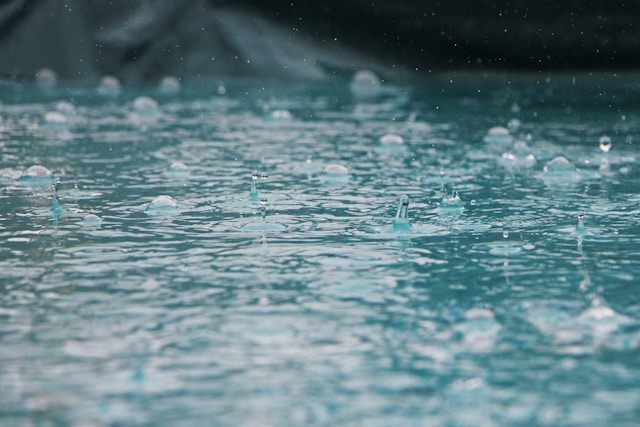
When it rains, most of us are concerned with whether we need an umbrella. But a recent Guardian Weatherwatch report highlights a much bigger question: where did that rain actually come from, and how might a changing climate affect where it falls in future?
New research from the University of Wyoming has found that atmospheric moisture is travelling farther before falling as precipitation.
Looking at 35 years of data across the contiguous United States, researchers found that in parts of the south-west and southern plains, water vapour was travelling around 50 – 80km farther than it did three and a half decades ago.
The study also found that vapour was remaining in the atmosphere for an additional two to four hours, and a greater proportion of the moisture producing rainfall was originating over the ocean rather than land.
The researchers say these changing atmospheric pathways could have important implications for water security and future resource management. Although the research focuses on the United States, the underlying message has relevance much closer to home.
Climate change is altering the water cycle, and businesses cannot necessarily assume that historic patterns of rainfall, drought and water availability will continue indefinitely.
For UK organisations, that makes responsible water management and long-term planning increasingly important.
The water cycle is changing
The water cycle is constantly moving water between oceans, land and the atmosphere. Water evaporates from seas, lakes, rivers and land before being transported through the atmosphere and eventually returning as precipitation.
A warmer atmosphere can hold more water vapour. According to the researchers, this means moisture can remain airborne for longer and travel greater distances before precipitation occurs.
This matters because the location of rainfall does not necessarily correspond to the location where the water originally evaporated.
In practical terms, the availability of water in one region can increasingly depend on processes happening somewhere else. That creates an additional layer of uncertainty for long-term water planning.
Why should businesses care about changing rainfall patterns?
A commercial organisation may not think of atmospheric moisture transport as a business issue. But water availability underpins thousands of everyday operations.
Manufacturing processes, food production, cleaning, cooling, hospitality, healthcare and commercial buildings all depend on reliable water supplies.
If rainfall patterns become less predictable, businesses may face greater variation in:
- Water availability
- Drought risk
- Seasonal demand
- Flooding and surface water
- Infrastructure pressures
- Water restrictions
This does not mean businesses should attempt to predict exactly where future rainfall will occur. Instead, it reinforces the value of using the water already available as efficiently as possible.
Don’t wait for a water shortage to start saving
One of the biggest mistakes businesses can make is treating water efficiency as something that only matters during a drought.
By the time restrictions are introduced or supplies come under significant pressure, there may be limited opportunity to make substantial changes. A more effective approach is to establish good water management practices under normal operating conditions.
That means understanding current consumption, identifying unnecessary use and putting systems in place to detect problems quickly. The result is a business that is better prepared regardless of what the weather does.
Start by understanding your water consumption
Many businesses know their annual water bill but have limited understanding of their actual consumption patterns. A total annual figure does not tell you whether water is being used efficiently. Detailed water consumption analysis can reveal much more.
For example, a business may discover that significant quantities of water are being used:
- Outside normal operating hours
- During weekends
- By a particular production process
- Through inefficient equipment
- During periods when demand should be low
Once these patterns are visible, managers can investigate the underlying causes and decide where improvements should be made.
Water audits can reveal hidden opportunities
A professional water audit takes this analysis a step further. Instead of simply measuring consumption, it examines how water moves through the business and where savings may be possible.
This can involve assessing:
- Water-intensive processes
- Equipment and fixtures
- Metering arrangements
- Internal and external water use
- Potential leaks
- Wastewater production
- Existing efficiency measures
An audit can also help businesses prioritise improvements. Rather than spending money on measures that may have little effect, organisations can focus investment on areas where meaningful reductions are achievable.
Businesses should consider their future water requirements
Water management should also form part of longer-term business planning. An organisation expanding its operations, adding production capacity or opening new premises may significantly increase its water requirements.
Rather than simply assuming sufficient supply will always be available, businesses can assess future demand as part of their wider water strategy.
This might involve considering:
- Expected changes in production
- Future staffing levels
- New equipment
- Additional premises
- Seasonal demand
- Opportunities for water recycling
- Rainwater harvesting
- Alternative water sources
Planning ahead gives businesses more options.
Rainwater harvesting can be part of the solution
Changing rainfall does not mean rainwater should be viewed only as a risk. For suitable commercial properties, rainfall can represent a useful resource.
Commercial rainwater harvesting systems can collect and store rainwater for appropriate non-potable applications, potentially reducing reliance on mains supplies.
Depending on the premises and intended use, harvested rainwater may be suitable for applications such as toilet flushing, irrigation or certain cleaning processes.
A professional assessment is important to determine whether a harvesting system is technically and financially appropriate for a particular site. Efficiency therefore provides a form of protection against an uncertain future.
A more strategic approach to water
The research highlighted by the Guardian demonstrates just how interconnected the global water cycle is, and how climate change is altering the movement of one of the world’s most important resources.
The study’s authors specifically point to implications for water resource governance, with water security increasingly influenced by conditions beyond the boundaries of individual regions.
For businesses, the message is straightforward: you cannot control the weather, but you can control how responsibly you manage the water available to you.