News
How Can Circular Wastewater Management Benefit UK Businesses?
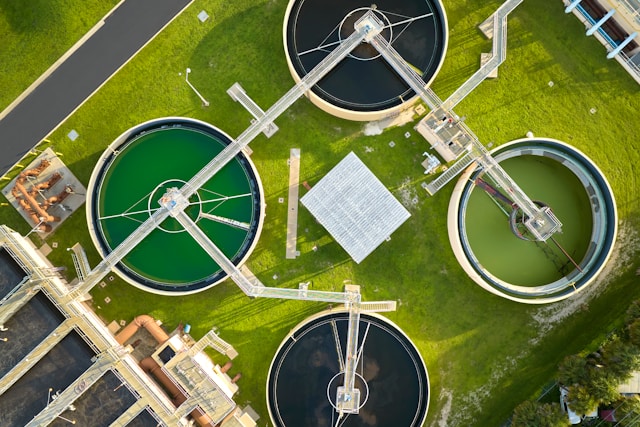
What if wastewater did not have to be treated as waste? That is the question behind a new European project demonstrating how used water can be treated and returned to productive use.
The LIFE4ZOO project, highlighted by the European Climate, Infrastructure and Environment Executive Agency in July, is demonstrating circular wastewater management at zoos in Czechia and Spain.
Zoos are particularly interesting examples because they can have substantial and continuous water requirements. Water is needed for animal care, habitat maintenance and other day-to-day operations, while the sites can generate significant volumes of wastewater.
The project is testing a combination of nature-based solutions, advanced filtration and renewable energy to treat and reuse water rather than relying entirely on fresh supplies.
At Zoo Liberec, the system aims to reduce freshwater consumption by up to 50 per cent, potentially saving around 40,000 cubic metres of water each year. A pilot at Zoo Barcelona could eventually meet around 60 per cent of the site’s total water requirements through reuse.
For commercial organisations in the UK, the project offers an important message: water that has already been used may still have value.
With drought conditions and water security increasingly prominent concerns, businesses should consider whether a more circular approach could reduce their reliance on mains water, lower waste and improve resilience.
What does circular water management mean?
Traditional water use is largely linear. Fresh water enters a site, it is used for a particular purpose and then wastewater leaves the premises. A circular approach looks for opportunities to keep water within the system for longer.
That does not mean every type of wastewater can simply be reused. Different applications require different levels of treatment, and health, safety and regulatory requirements must always be considered.
However, where appropriate infrastructure and treatment systems are available, water can potentially be recovered and reused for suitable applications.
Why is water reuse becoming more important?
The European project comes against a backdrop of increasing pressure on freshwater resources.
The European Commission notes that almost 40 per cent of the EU population was affected by water scarcity in 2019, with climate change expected to increase pressure on freshwater resources.
The UK faces its own challenges. Periods of drought, changing rainfall patterns, population growth and rising demand are increasing the importance of using existing water supplies efficiently.
For businesses, this creates two reasons to examine water reuse. The first is environmental: reducing demand for fresh water helps conserve a valuable resource.
The second is commercial: using less mains water can reduce water costs and potentially improve resilience if availability becomes more constrained.
Which businesses could benefit from water recycling?
Water recycling is not a universal solution. Its viability depends on factors including the type of wastewater produced, the volume involved, the quality required for reuse and the physical layout of the site.
However, water-intensive organisations may have particularly strong opportunities.
Potential examples include:
- Manufacturing facilities
- Food and drink operations
- Hotels and leisure venues
- Large visitor attractions
- Commercial laundries
- Industrial sites
- Agricultural businesses
- Healthcare facilities
- Large property developments
Businesses with consistent water demand may find it easier to identify a useful application for recovered water.
Start with a water audit
Before investing in recycling equipment, businesses need to understand their existing water profile. A professional water audit can provide a detailed assessment of how water is supplied, consumed and discharged across a site.
This can identify:
- Major sources of water consumption
- Wastewater volumes
- Water-intensive processes
- Potential leakage
- Opportunities for efficiency improvements
- Areas where reuse might be feasible
This assessment is important because recycling is only one part of responsible water management.
The most effective approach is often to reduce unnecessary consumption first, then investigate opportunities to reuse what remains.
Recycling can support water resilience
One of the most compelling reasons to explore water reuse is resilience. Businesses cannot control rainfall or national water infrastructure investment. They can, however, reduce their dependence on fresh mains supplies where suitable alternatives exist.
Reusing water locally can help organisations become less vulnerable to fluctuations in water availability.
The LIFE4ZOO project specifically aims to improve resilience to water scarcity alongside reducing freshwater consumption and emissions. For UK businesses facing an uncertain climate, water recycling is certainly worth considering.
Rainwater harvesting is another option
Water recycling is not the only way businesses can reduce reliance on mains water: commercial rainwater harvesting can provide an alternative source for appropriate non-potable uses.
Rainwater collected from roofs can potentially be stored and used for applications such as irrigation or toilet flushing, depending on the system and site requirements.
Combining rainwater harvesting with wastewater reuse may be appropriate for some large sites, although each project needs careful technical assessment.
The aim is not necessarily to eliminate mains water altogether. Instead, businesses can look at whether different water sources can be matched to different uses.
Think about water as a resource
The circular economy is based on keeping resources in use for as long as possible rather than following a simple take-use-dispose model.
Applying that principle to water means looking at the entire journey of water through a business.
- Where does it come from?
- How is it used?
- How much is lost?
- What happens when it leaves the site?
- Could some of it be treated and reused?
These questions can reveal opportunities that are easily missed when water is considered simply as another utility.
Water recycling can also reduce carbon
There can be an additional benefit to reducing freshwater demand. The LIFE4ZOO project estimates that its systems could halve the carbon footprint associated with water supply at the participating zoos, equivalent to around 92 tonnes of carbon dioxide each year.
The exact environmental benefit will vary between businesses, but reducing the need to abstract, treat, pump and distribute fresh water can contribute to wider resource-efficiency objectives.
For organisations working towards sustainability or carbon-reduction targets, water management can therefore form part of a broader environmental strategy.
Making wastewater part of the solution
The LIFE4ZOO project offers a useful example of how organisations can rethink their relationship with water.
By treating wastewater as a potential resource rather than infinitely disposable, businesses may be able to reduce freshwater consumption, control costs and strengthen their resilience.