News
How Will Expanding AI Data Centres Affect Water Demand?
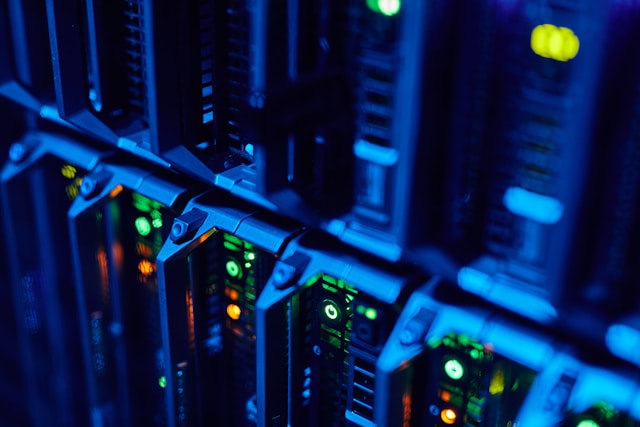
Artificial intelligence is transforming almost every industry, from healthcare and manufacturing to finance and logistics. Behind every AI-powered application, however, lies an often-overlooked piece of infrastructure: the data centre.
As demand for AI computing grows, so too does the need for large-scale data centres to house thousands of high-performance servers.
While much of the discussion has focused on electricity consumption, there is another challenge that could become equally significant: water.
According to a new Guardian report, Water UK has warned that there may not be enough water to support the Government’s ambitions for expanding AI data centres unless long-term water planning changes significantly.
The industry body estimates that data centres in England already use around 6.6 million litres of drinking water every day, with demand expected to increase substantially by 2030.
It argues that current government forecasts do not fully account for this growing commercial demand, particularly in already water-stressed parts of southern and eastern England.
While this debate focuses on one fast-growing industry, it raises a much broader question for businesses across the UK: How can organisations use water more efficiently as demand for this increasingly valuable resource continues to grow?
Why do data centres need so much water?
Modern data centres generate enormous amounts of heat. Thousands of servers operate continuously, processing vast quantities of information every second.
Without effective cooling systems, temperatures would quickly rise, reducing performance and potentially damaging expensive equipment.
Many facilities use sophisticated cooling technologies that require significant volumes of water to dissipate heat. Although some newer facilities are adopting air cooling or hybrid systems, water remains an important part of cooling infrastructure across much of the industry.
As AI adoption accelerates, demand for both computing power and cooling capacity is expected to increase.
Water is becoming a strategic business resource
For many years, water has been viewed as a relatively inexpensive utility. However, changing weather patterns, population growth, increasing industrial demand and ageing infrastructure are placing greater pressure on UK water supplies.
Businesses are also facing rising expectations around sustainability, environmental reporting and responsible resource management. As a result, water should increasingly be viewed as a strategic operational asset rather than simply another monthly bill.
Understanding exactly how much water a business uses, and where it is being used, is becoming essential for both financial and environmental reasons.
Every business can benefit from better water efficiency
Although relatively few organisations operate data centres, every commercial site consumes water in some form.
Examples include:
- Manufacturing and industrial processes
- Hotels and leisure facilities
- Hospitals and healthcare settings
- Universities and schools
- Office buildings
- Food and beverage production
- Distribution centres
- Retail premises
Even businesses with comparatively low water consumption can often identify opportunities to reduce unnecessary waste. Improving efficiency not only lowers operating costs but also strengthens resilience as pressure on water resources continues to grow.
You can’t manage what you don’t measure
One of the biggest obstacles to improving water efficiency is simply a lack of information. Many businesses only receive water consumption data through monthly or quarterly invoices.
While bills show total usage, they rarely explain:
- When water was consumed
- Which parts of a site used the most water
- Whether leaks have occurred
- Whether equipment is operating efficiently
- How consumption changes throughout the day
Without this level of insight, identifying opportunities for improvement becomes extremely difficult.
How can water consumption analysis reduce costs?
Detailed water consumption analysis allows organisations to understand their usage far more effectively. Using technologies such as water flow data logging, businesses can monitor water use continuously.
This enables facilities managers to identify:
- Overnight water usage
- Unexpected spikes in consumption
- Continuous flow that may indicate hidden leaks
- Seasonal trends
- Process inefficiencies
- Equipment requiring maintenance
Rather than reacting after costs have increased, businesses can investigate unusual patterns immediately.
What does a professional water audit involve?
Collecting data is only the first step. A professional water audit helps organisations understand why water is being used and where improvements can be made.
An experienced water management consultant will assess both physical infrastructure and consumption data to identify practical opportunities for savings.
A commercial water audit may include:
- Reviewing water bills
- Validating billing accuracy
- Assessing water meters
- Identifying leaks
- Evaluating water-intensive processes
- Recommending efficiency improvements
- Reviewing wastewater generation
- Identifying opportunities for water reuse
Many businesses discover that relatively simple improvements deliver significant long-term savings.
Leak detection: one of the fastest ways to reduce waste
Water shortages are often discussed in terms of reservoirs and rainfall. However, hidden leaks continue to waste enormous quantities of water every day. Within commercial premises, even a relatively small underground leak can continue unnoticed for months.
Professional leak detection services help businesses locate problems quickly before they lead to:
- Higher water bills
- Property damage
- Production disruption
- Increased maintenance costs
- Unnecessary water loss
Early intervention almost always costs less than repairing major failures.
Are there commercial alternatives to mains water?
As demand for water increases, more organisations are exploring alternative sources.
Depending on the nature of the business, opportunities may include:
- Commercial rainwater harvesting
- Water recycling systems
- Greywater reuse
- Alternative water sources for non-potable applications
Using treated or recycled water where appropriate can reduce dependence on mains supplies while supporting wider sustainability objectives.
These systems are becoming increasingly attractive for organisations with high water demand or long-term environmental targets.
Water stewardship is becoming a business priority
The discussion surrounding AI infrastructure demonstrates that water availability is no longer simply an issue for water companies. Businesses across every sector have a role to play in using water responsibly.
Water stewardship involves understanding how water is used, reducing unnecessary consumption and planning for future resilience.
Organisations that take a proactive approach often benefit from:
- Lower operating costs
- Improved environmental performance
- Stronger ESG reporting
- Better resilience during periods of drought
- Greater confidence in long-term business planning
Responsible water management is increasingly becoming a mark of good corporate governance rather than just an operational consideration.
Planning ahead rather than reacting
Whether the challenge comes from growing AI infrastructure, climate change or increasing demand from expanding businesses, one thing is becoming clear: water will remain an increasingly valuable resource.
Regular monitoring, professional water audits and strategic investment in efficiency measures allow organisations to reduce waste, improve operational performance and protect themselves against rising costs.