News
Veolia’s Warning: Why Water Scarcity Is Now A Business Issue
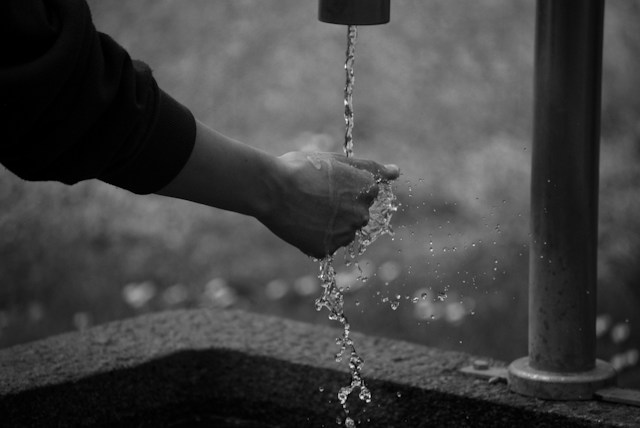
Water scarcity may once have seemed like a problem for hotter countries, but that assumption is becoming increasingly difficult to maintain.
In a recent BBC interview, Veolia CEO Estelle Brachlianoff warned that drought and water scarcity had already cost the UK more than £1 billion this summer, with around two-thirds of the country affected by drought.
She argued that climate change means water shortages are likely to become more frequent and that waiting until the next crisis will ultimately cost more than acting now.
Her comments raise an important question for businesses: what can organisations do to become more resilient as water becomes a more constrained resource?
The answer is not simply to find more water. It also involves making better use of the water already available.
Water security is becoming a business issue
Water is fundamental to far more business activity than many organisations realise. It can be required for manufacturing processes, cleaning, cooling, food production, sanitation, landscaping and countless other everyday operations.
If supply becomes restricted or the cost of water rises, the effects can extend beyond the water bill. Businesses could face operational disruption, higher costs or the need to change processes at short notice.
This makes water management increasingly relevant to business continuity and long-term planning. The Veolia interview also highlights the scale of future demand.
Brachlianoff said UK data centres could consume the equivalent of the combined water use of Birmingham and Glasgow by 2030. With demand increasing while climate pressures affect supply, businesses have good reason to examine their own consumption now.
Better data can help identify where water is being lost
One of the ideas discussed in the interview is using artificial intelligence to identify leaking sections of water infrastructure more precisely, allowing investment to be targeted where it is most needed rather than replacing entire stretches unnecessarily.
The same principle of targeted intervention can apply at a business level. You cannot manage water efficiently if you do not know where it is going.
Water consumption analysis can reveal patterns that may otherwise remain hidden. A sudden increase in usage, unusually high overnight consumption or unexplained changes between sites could indicate a leak, inefficient equipment or an operational issue.
Automated Meter Reading (AMR) and water flow data logging can provide more detailed information about consumption, helping businesses move beyond occasional meter readings and develop a much clearer understanding of their water use.
That information can then support practical decisions about where improvements are most worthwhile.
Fixing leaks is about more than preventing waste
A leaking pipe or faulty fitting may appear to be a relatively minor maintenance problem. In reality, an ongoing leak can waste substantial quantities of treated water and increase costs over time.
Commercial water leak detection can help businesses identify problems that are not necessarily obvious during routine inspections.
This is particularly important on larger sites, where pipework may extend across buildings, yards and production areas. A small problem in an inaccessible location can continue for months if nobody is monitoring consumption closely enough to notice the warning signs.
Repairing leaks therefore has two benefits: it can reduce unnecessary water use while also preventing the business from paying for water it never intended to consume.
Reusing water could reduce pressure on supplies
Another major theme from the Veolia interview is the potential for greater water reuse. Brachlianoff highlighted Jordan, where treated wastewater provides around 75 per cent of the water used for irrigation, as an example of how recycled water can reduce pressure on freshwater resources.
The precise opportunities will vary considerably between businesses, but the underlying principle is worth considering. Does every application on a commercial site actually require drinking-quality water?
Where appropriate, water recycling or alternative water sources can potentially reduce reliance on mains supplies. Rainwater harvesting may also provide a useful source for suitable non-potable applications.
These measures will not be practical everywhere, but a water audit can help establish where they might make sense.
Prepare before restrictions become necessary
Perhaps the most important point from the interview is the need to act before a crisis develops. Brachlianoff argued that the UK should not wait until the next shortage to invest in resilience, warning that action taken during a crisis is more expensive and disruptive.
For businesses, preparation does not necessarily mean making major infrastructure investments immediately.
It can begin with understanding current consumption and identifying avoidable waste.
A sensible starting point could include:
- Reviewing water bills and checking for potential errors
- Analysing consumption patterns
- Investigating unexplained increases in usage
- Carrying out a commercial water audit
- Installing AMR or flow monitoring where appropriate
- Checking for leaks and arranging repairs
- Assessing opportunities for water recycling
- Exploring rainwater harvesting or other alternative sources
- Developing a longer-term water strategy
Taking these steps can also help businesses understand which larger investments are genuinely justified.
Water efficiency is becoming part of resilience
The debate about Britain’s water infrastructure will continue, including questions about investment, regulation, ownership and future supply. But businesses do not have to wait for those wider questions to be resolved before taking action.
Whatever happens at national level, organisations will still need to understand their own consumption and reduce avoidable demand.
The UK’s recent experience of drought demonstrates why this matters. Water availability can affect businesses directly, while growing demand from sectors such as data centres adds another layer of pressure.
For commercial organisations, improving water efficiency is therefore not simply an environmental gesture. It can be a practical way to control costs, reduce waste and strengthen operational resilience.
H2o Building Services has more than 30 years of experience in water supply and water engineering, and we can help organisations identify where water is being used, where it is being wasted and where there is scope for improvement.