News
What Can Businesses Learn From Europe’s Drought Response?
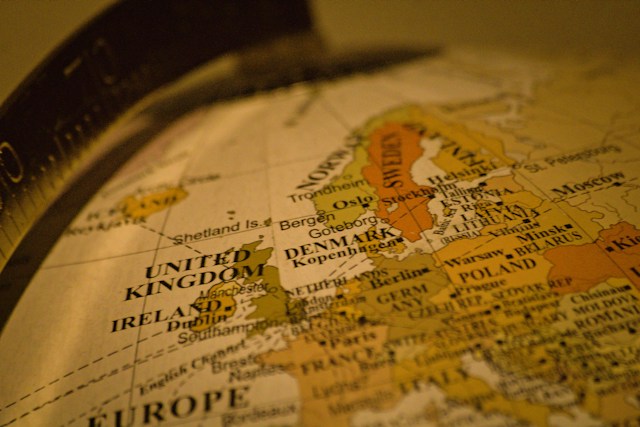
Europe is facing increasing pressure on its water resources, with drought no longer confined to the traditionally drier parts of the continent.
A recent analysis by Deutsche Welle (DW) highlights how areas as far north as Denmark and Sweden experienced exceptionally dry conditions during August 2026, while major rivers including the Rhine and Danube have reached historically low levels.
The report asks an important question: what actually helps to reduce water use during drought? For businesses in the UK, the answer offers some useful lessons.
Although Britain may not experience water scarcity in exactly the same way as southern Europe, changing rainfall patterns, population growth, infrastructure pressures and periods of prolonged dry weather mean water resilience is becoming increasingly relevant.
There is no single solution to water scarcity
One of the most important messages from the DW analysis is that there is no single measure capable of solving Europe’s water challenges.
The European Environment Agency (EEA) similarly emphasises a combination of measures, including reducing leakage, improving operational efficiency, recycling water and making better use of alternative sources such as rainwater.
Its latest assessment identifies significant water-saving potential across electricity production, agriculture, public water supply and industry. This is relevant to businesses because water efficiency should not necessarily mean simply asking employees to use less.
A more effective approach is to look at where water is being used, why it is being used, whether that use is necessary and whether any of it is being lost unnecessarily. That requires better information.
Start by understanding your water consumption
It can be surprisingly difficult for a business to know exactly how much water it uses and where that water goes.
A single meter reading may show total consumption, but it does not necessarily reveal whether usage is associated with production, cleaning, washrooms, irrigation, cooling systems or an undetected leak.
Water consumption analysis can provide a much clearer picture. By examining consumption patterns over time, businesses can identify unusual increases, investigate areas of particularly high demand and establish where efficiency measures are likely to have the greatest impact.
For larger premises or organisations with multiple sites, Automated Meter Reading (AMR) and water flow data logging can provide even greater visibility.
Rather than relying solely on occasional manual readings, regular data can help reveal changes in consumption that might otherwise go unnoticed. This turns water management from a reactive exercise into a more preventative one.
Leaks are a water efficiency problem
The DW report highlights the scale of water lost through leaking public infrastructure, noting that around one in four litres of drinking water supplied in EU countries can be lost before reaching its destination.
The EEA’s analysis also identifies leakage and losses as one of the major opportunities for improving water efficiency.
Businesses have their own equivalent problem. A leaking pipe, faulty toilet, damaged fitting or malfunctioning piece of equipment can waste significant quantities of treated water without producing an obvious disruption to day-to-day operations.
This is why commercial water leak detection should form part of a wider water management strategy rather than being treated purely as an emergency service.
Monitoring can help identify unexplained increases in consumption, while specialist leak detection can locate problems that are difficult to find through visual inspection alone.
Repairing the underlying issue then prevents the business from continuing to pay for water it never actually uses.
Efficiency can be better than finding more water
Another important lesson from Europe’s drought response is that increasing supply is not always the best starting point.
The EEA describes a ‘water efficiency first’ principle, meaning that reducing demand and improving efficiency should take priority over simply seeking additional sources of water.
For businesses, this can make practical and financial sense. Before investing in additional infrastructure or accepting higher consumption as unavoidable, it is worth asking whether existing demand can be reduced.
Could equipment be adjusted? Could inefficient processes be improved? Could water be reused? Are there unnecessary losses? Is the business being billed accurately for what it actually consumes?
A water audit can help answer these questions and turn general concerns about efficiency into a practical programme of improvements.
Consider where alternative water sources could help
Reducing demand is central to water resilience, but alternative sources can also have an important role.
The EEA identifies rainwater harvesting and water reuse among the measures that can help diversify water supplies, provided their environmental, health and energy implications are properly considered.
For suitable commercial properties, rainwater harvesting could provide an alternative source for applications where potable drinking water is not required.
Water recycling can also offer opportunities for businesses with processes that generate wastewater or have repeated requirements for water.
The objective is not necessarily to replace mains water completely. In many cases, using an alternative source for appropriate applications can reduce demand on the mains supply and improve resilience during periods of water stress.
What should businesses do now?
The first step does not have to be a major investment. Businesses can begin by establishing a clearer understanding of their current position.
That could include:
- Reviewing water bills for errors or unusual changes
- Analysing consumption across sites or departments
- Investigating unexplained increases in usage
- Carrying out a commercial water audit
- Introducing AMR or water flow monitoring where appropriate
- Checking for leaks and repairing faulty equipment
- Considering rainwater harvesting or water recycling
- Identifying processes where water use could be reduced
- Developing a longer-term water strategy
The EEA estimates that significant reductions in water abstraction are technically possible across several major sectors, although the potential varies depending on the type of activity and location.
For individual businesses, the most valuable savings will therefore depend on their circumstances. There is no universal solution, which makes understanding existing consumption particularly important.
Preparing for a more water-conscious future
Europe’s current drought conditions provide a reminder that water availability cannot always be taken for granted.
As climate patterns change, businesses may increasingly need to consider not just how much water they consume, but how efficiently they use it and how resilient their operations would be during periods of restricted availability.
The most effective response is likely to come from a combination of better monitoring, leak prevention, efficient equipment, informed decision-making and, where appropriate, water reuse or alternative supplies.