News
Water Infrastructure Investment And The Impact On Businesses
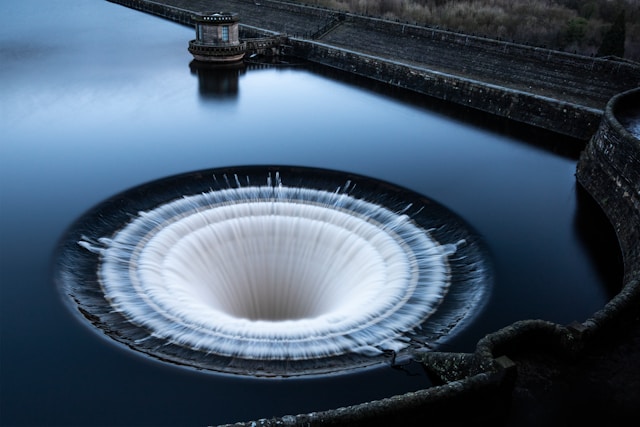
The UK’s water infrastructure is facing a difficult combination of pressures: prolonged drought, rising demand, climate change and the need for substantial investment in ageing systems.
A recent report in New Civil Engineer highlighted calls from Sir John Armitt, chair of the National Infrastructure Commission, for a cross-party approach to long-term investment in water infrastructure.
His comments came as drought conditions continued across much of England, with concerns growing about the country’s ability to provide enough water in the future.
The debate around reservoirs, water transfers and other major infrastructure projects is ultimately a national one. However, it also has a practical implication for individual organisations.
Businesses cannot control how quickly new reservoirs are built or how water infrastructure is funded. They can, however, take greater responsibility for how efficiently they use the water already available.
That makes responsible water management an important part of business resilience.
Why is water infrastructure under pressure?
The UK’s reputation for rainy weather can make water scarcity seem surprising. Yet the availability of water depends on much more than how much rain falls in a particular week.
Reservoirs, rivers and groundwater need sufficient time and rainfall to recover, while hotter conditions increase evaporation and can drive up demand.
The Environment Agency has reported that England had received just 10 per cent of its long-term average rainfall during July, making it the driest on record.
Temperatures remained above average, and at the same time, the UK’s population and economy continue to create additional demand for water.
This creates a difficult equation: more demand, less predictable supply and infrastructure that requires substantial investment.
Why long-term water investment matters
Major water infrastructure projects take years to plan, approve and construct. New reservoirs, water transfer schemes, treatment facilities and network improvements cannot simply be introduced when a drought arrives.
This is why calls for a long-term, cross-party approach are significant. Infrastructure needs to be planned over decades rather than according to short political cycles.
For businesses, the lesson is equally important. If national water resilience depends partly on infrastructure that may take years to develop, organisations should not assume that future supply challenges will be solved before they affect their operations.
Improving efficiency now is a practical way to reduce exposure to future uncertainty.
Businesses have a role to play
Water companies and governments have an important role in maintaining reliable supplies. Businesses also have a responsibility to understand and manage their own consumption.
Commercial water use can be substantial, particularly in sectors such as:
- Manufacturing
- Food production
- Hospitality
- Healthcare
- Agriculture
- Education
- Property management
- Warehousing and logistics
Even organisations with relatively modest water requirements can waste significant quantities through leaks, inefficient equipment or poorly monitored processes.
Reducing unnecessary consumption helps businesses lower costs while also reducing pressure on the wider water system.
Start with accurate water consumption data
One of the simplest ways to improve water management is to find out what is actually happening on site.
Many businesses know how much they spend on water but have little visibility over how that consumption is distributed.
A water bill may tell you that usage increased during a particular period, but it will not necessarily tell you whether the increase was caused by:
- A leaking pipe
- Changes in production
- Higher occupancy
- Faulty equipment
- Cleaning processes
- Seasonal demand
This is where detailed water consumption analysis can provide valuable insight.
Water monitoring can identify problems earlier
Automated Meter Reading (AMR) and water flow data logging give businesses a much clearer picture of their consumption. Instead of relying solely on periodic meter readings, organisations can monitor patterns over time and identify unusual activity.
For example, a site that normally shuts down overnight should not necessarily be showing substantial water flow at 2am. Persistent overnight consumption could indicate a leak or equipment that has not been properly shut down.
Similarly, a sudden spike during normal operating hours might indicate a change in production or an equipment fault. The earlier these patterns are recognised, the sooner they can be investigated.
A water audit can reveal where savings are possible
Data is most useful when it leads to action. A professional water audit examines how water is entering, moving through and leaving a commercial site.
This can include an assessment of:
- Water meters and supply arrangements
- Internal plumbing
- Production processes
- Equipment
- Sanitary facilities
- Cleaning systems
- External water use
- Wastewater
- Potential leaks
The objective is to establish where water is being used efficiently and where there is scope for improvement. For businesses, this can provide a practical roadmap for reducing consumption rather than relying on general advice.
Water efficiency can reduce more than your water bill
Reducing water consumption can have benefits beyond the immediate supply charge. For businesses that heat, pump, treat or discharge water, reducing consumption may also lower associated energy and wastewater costs.
For example, using less hot water can reduce the energy required to heat it. Reducing wastewater volumes can also affect associated charges. This means water efficiency can contribute to broader operational improvements.
It is therefore worth considering water alongside energy, waste and other resource-efficiency programmes rather than treating it as a completely separate issue.
Water strategy should be part of business planning
A business opening a new site, increasing production or expanding its workforce should consider its future water requirements alongside other infrastructure needs.
This is particularly important if the organisation operates in an area where water resources are already under pressure.
A dedicated water strategy can help answer questions such as:
- How much water does the business currently use?
- How is consumption likely to change?
- Where could demand be reduced?
- Are there opportunities for recycling or rainwater harvesting?
- What infrastructure improvements may be required?
- How could future restrictions affect operations?
Planning ahead gives businesses time to make considered investments rather than responding to problems under pressure.
Responsible water management is a form of resilience
The calls for greater long-term investment in national water infrastructure underline the scale of the challenge facing the UK.
The UK may need major infrastructure investment to secure its long-term water future. For individual businesses, however, building resilience can start much closer to home: understanding how much water you use, where it goes and what you can do to use less.